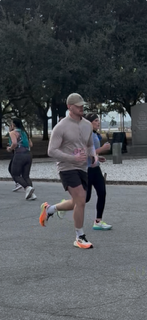
Charlotte summers are not forgiving. By June, you’re running in temperatures that hover around 90°F by mid-morning, with humidity that makes every mile feel like two. I came into my first full summer of training thinking I’d push through it. What I learned instead changed how I approach effort — not just in heat, but in every run.
The first lesson: pace is a proxy for effort, and effort is what actually matters. On a cool October morning, a 9:30 mile might be an easy effort. On a humid July morning in Charlotte, that same pace might be a hard effort. Treating pace as the fixed variable while ignoring the real cost was burning me out.
Slowing Down to Run Better
Somewhere around mile five of a long run in late June, I stopped caring about pace entirely. I was running by feel — genuinely easy — and my GPS watch was showing times I would have been embarrassed by three months earlier. But I finished the run strong, recovered the next day, and came back for my next workout fresher than I’d been in weeks.
Slowing down in heat isn’t failure. It’s correct adjustment. Elite runners do it. Your cardiovascular system is working harder to cool you down, which means there’s less capacity left for locomotion. Fighting that reality doesn’t build fitness — it just accumulates fatigue and increases injury risk.
Practical Adjustments That Helped
I moved my long runs to 6:00 a.m. to catch the coolest part of the day. I carried water on any run over five miles instead of relying on water fountains. I added electrolytes — not because I was sweating more than usual, but because I finally understood that losing salt affects performance in ways that drinking more water alone won’t fix.
I also shortened my long run by two miles in the hottest part of the summer. It felt like a step backward at the time. Looking at my training log now, it was the right call — I stayed healthy through August when several people I run with were sidelined with overuse injuries.
The Mindset Shift
The heat taught me to decouple my ego from my pace. Running is a long game. The purpose of summer training isn’t to set personal records — it’s to build a base that makes fall racing possible. Once I accepted that, summer runs became something I looked forward to rather than something I dreaded and pushed too hard through.
If you’re training in Charlotte or anywhere with a real summer, take the season seriously as a training block rather than treating it as an obstacle. The adaptation you build — physiological and mental — will pay off when temperatures drop and race season arrives.